The Tower of Babel
Genesis 11:1-9
They wanted to reach heaven by building. God stopped them by speaking.
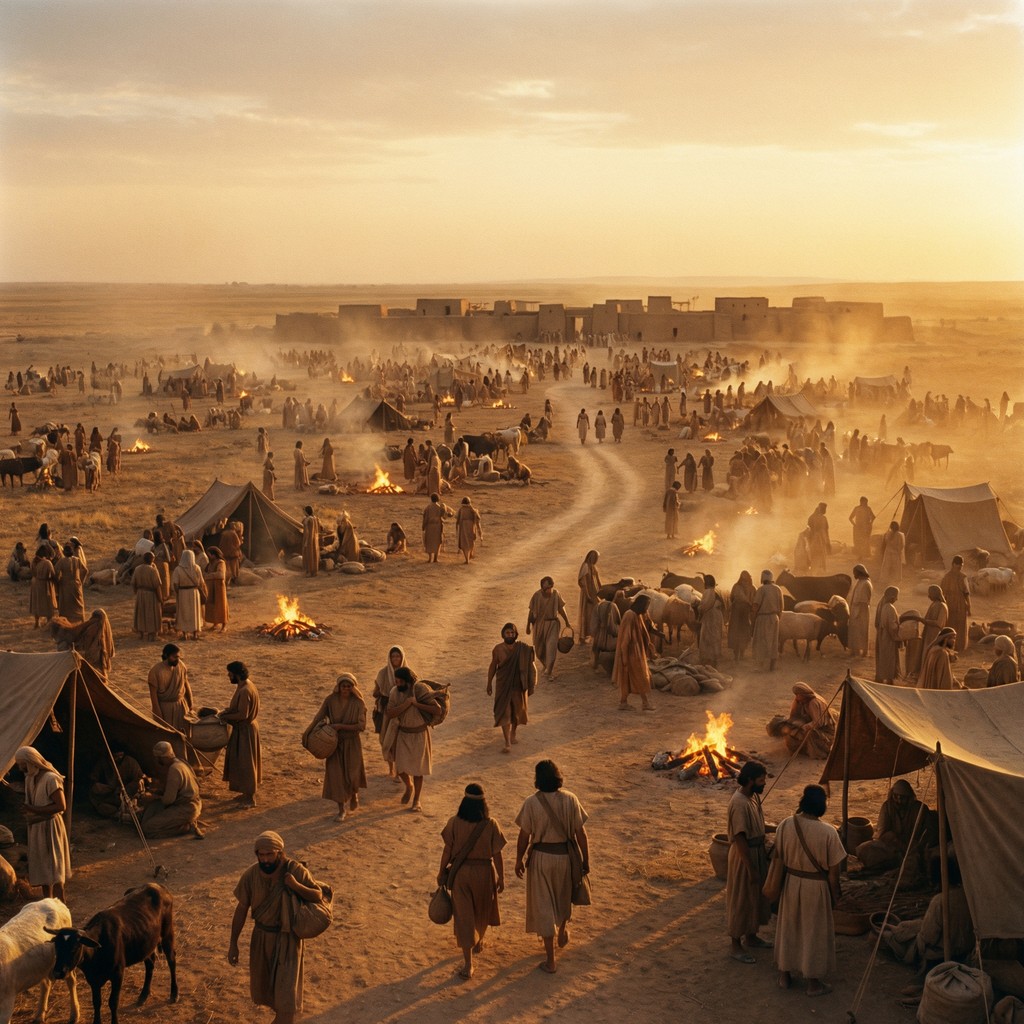
Humanity shares one language, one ambition, and one plan: build a city with a tower that reaches the heavens. It's not the engineering that bothers God — it's the motive. They want to make a name for themselves, to become unstoppable. So God does something elegantly simple. He scrambles their language. Suddenly no one understands anyone else. The construction stops. The people scatter. The unfinished tower gets a name that sounds like the Hebrew word for confused.
- Pride
- Human Ambition
- God's Sovereignty
- Division
The Tower of Babel: common questions
Why did God confuse the languages at the Tower of Babel?
The people settled in Shinar and built a city and tower 'to make a name' for themselves and avoid being scattered (Genesis 11:4). God confused their language so they could not understand one another, and they were scattered over the earth—the opposite of what they intended.
Where was the Tower of Babel?
Genesis 11:2 places it on a plain in the land of Shinar, which is southern Mesopotamia (Babylonia). The description of bricks and bitumen fits Mesopotamian ziggurat construction, and the name Babel is linked to Babylon.
What does 'Babel' mean?
The narrative connects it to the Hebrew verb 'balal,' meaning 'to confuse' (Genesis 11:9). In Akkadian, 'Bab-ilu' means 'gate of god'—the story turns the city's proud name into a pun on confusion.