The Ten Plagues — Details That Change How You Read the Story
Egyptian magicians replicated the first plagues. Pharaoh's heart was hardened — but sometimes he hardened it himself. The real plague story is more complex than you think.
Posted by
 HearBibleStories Editorial Team
Related reading
Crossing the Red Sea — It Took All Night, Not Minutes
The crossing took all night. A pillar of fire stood between the armies. And 'Red Sea' may be a mistranslation. The real account is more dramatic than you think.
Jonah — Most People Only Know Half the Story
Jonah wasn't swallowed by a whale. And getting spit out wasn't the end — the real story gets stranger from there. Most people have only heard half of it.
David and Goliath — Was Goliath Really 9 Feet Tall?
Was Goliath really over 9 feet tall? The oldest manuscripts say something different. The real story has details most people have never heard.
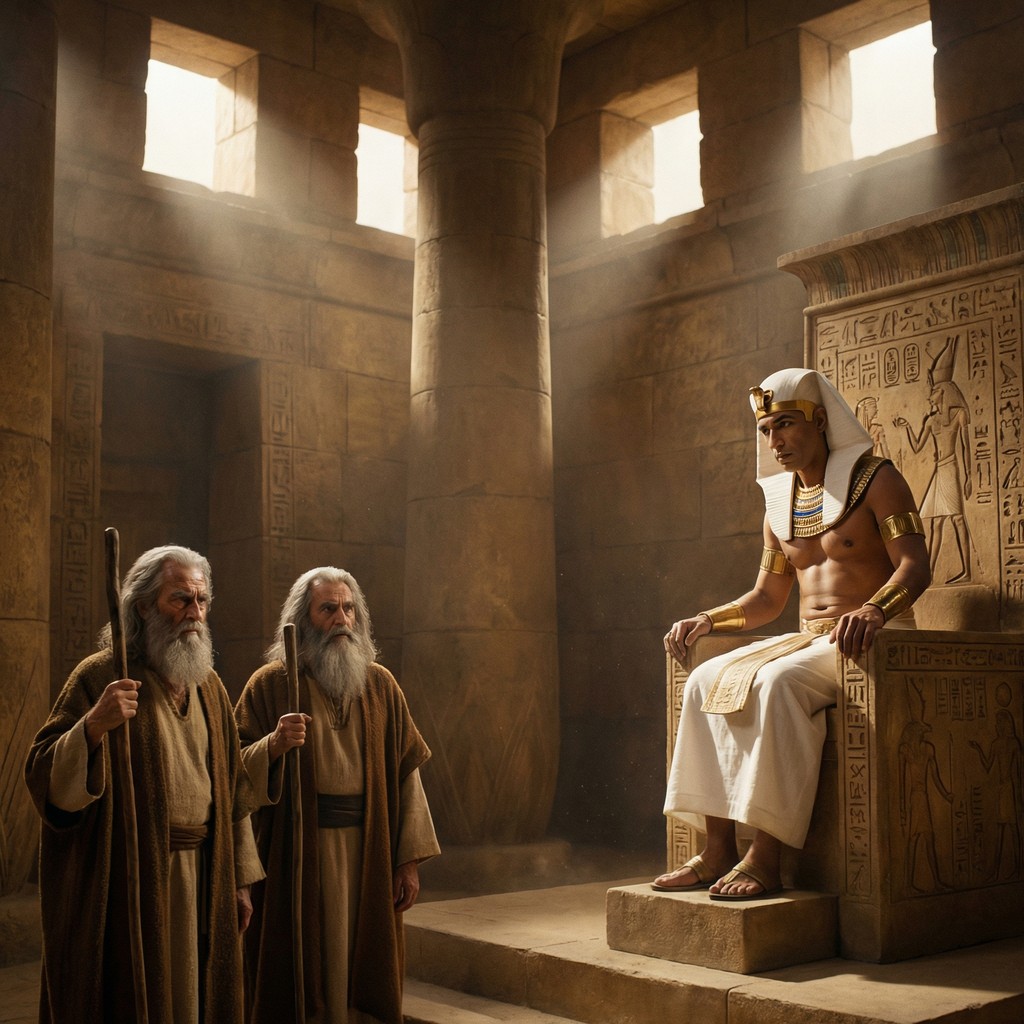
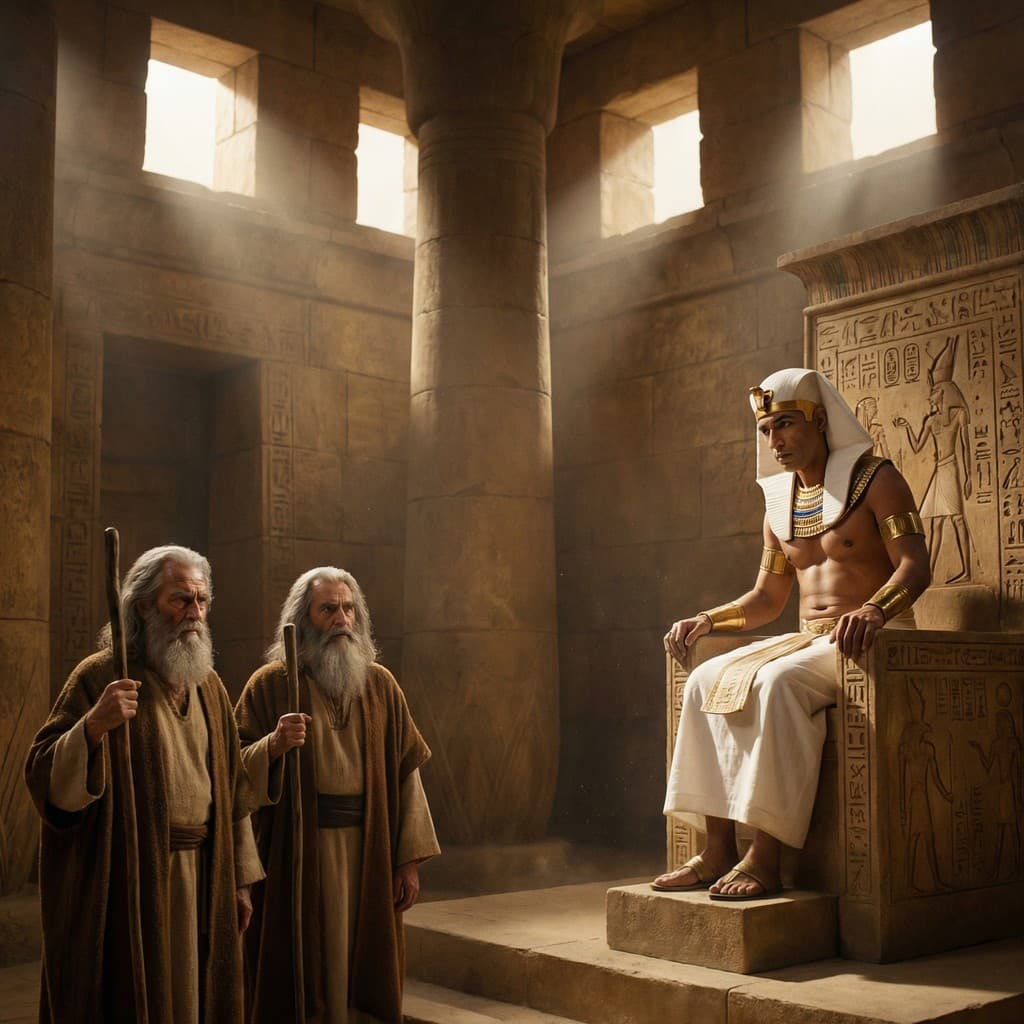
Most people can name a few of the ten plagues — blood, frogs, darkness, the death of the firstborn. But the full sequence in Exodus contains details that fundamentally change the story: Egyptian magicians who could replicate some plagues, a pattern of escalation, and a complicated question about Pharaoh's free will.
The Egyptian magicians matched the first two plagues
When Moses turned the Nile to blood, Pharaoh's magicians did the same thing. When frogs covered the land, the magicians produced more frogs. They could replicate the problem — but they couldn't reverse it. By the third plague — gnats — they failed, and told Pharaoh this was the finger of God.
Who hardened Pharaoh's heart?
The text alternates. Sometimes it says God hardened Pharaoh's heart. Sometimes it says Pharaoh hardened his own heart. The pattern shifts over the course of the plagues — early on, Pharaoh hardens his own heart; later, the text attributes it to God. This tension is right there in the text, unresolved.
The plagues escalated in a specific pattern
The plagues move from uncomfortable to devastating in a structured progression: water, then animals, then physical affliction, then agricultural destruction, then darkness, then death. Each set of three follows a pattern — warning, warning, no warning. The structure is deliberate.
Goshen was exempt
Starting from the fourth plague onward, the land of Goshen — where the Israelites lived — was explicitly spared. The plagues fell on Egypt but stopped at the border of the Israelite territory. The text makes this geographic distinction repeatedly.
The final plague required action, not just belief
For the tenth plague, the Israelites weren't automatically protected. They had to slaughter a lamb, apply its blood to their doorframes, and stay inside. If they didn't act, the text implies no exemption. The Passover wasn't passive — it required specific obedience.
The ten plagues are more structured, more layered, and more surprising than the summary version. Hear every plague, every detail, every escalation.
Frequently Asked Questions
Could the Egyptian magicians replicate the plagues?
Yes — they successfully replicated the first two plagues (water to blood and frogs) but failed at the third (gnats), declaring it was 'the finger of God.'
Did God harden Pharaoh's heart or did Pharaoh harden his own?
Both. The text alternates — early plagues show Pharaoh hardening his own heart, while later passages attribute it to God. The tension is present throughout the narrative.
Were the Israelites affected by the plagues?
From the fourth plague onward, the land of Goshen where the Israelites lived was explicitly exempt. The plagues affected Egypt but not the Israelite territory.
Hear the Bible come to life
Listen to hundreds of Bible stories with HD narration on the HearBibleStories app.


Or browse the full story catalogue on the web.
Related reading
Crossing the Red Sea — It Took All Night, Not Minutes
The crossing took all night. A pillar of fire stood between the armies. And 'Red Sea' may be a mistranslation. The real account is more dramatic than you think.
Jonah — Most People Only Know Half the Story
Jonah wasn't swallowed by a whale. And getting spit out wasn't the end — the real story gets stranger from there. Most people have only heard half of it.
David and Goliath — Was Goliath Really 9 Feet Tall?
Was Goliath really over 9 feet tall? The oldest manuscripts say something different. The real story has details most people have never heard.
Noah's Ark — It Wasn't Two of Every Animal
Two of every animal? Not exactly. The Bible specifies different numbers for different animals — and the ark itself is described in surprising detail.