The Resurrection — The Details That Differ Between the Gospels
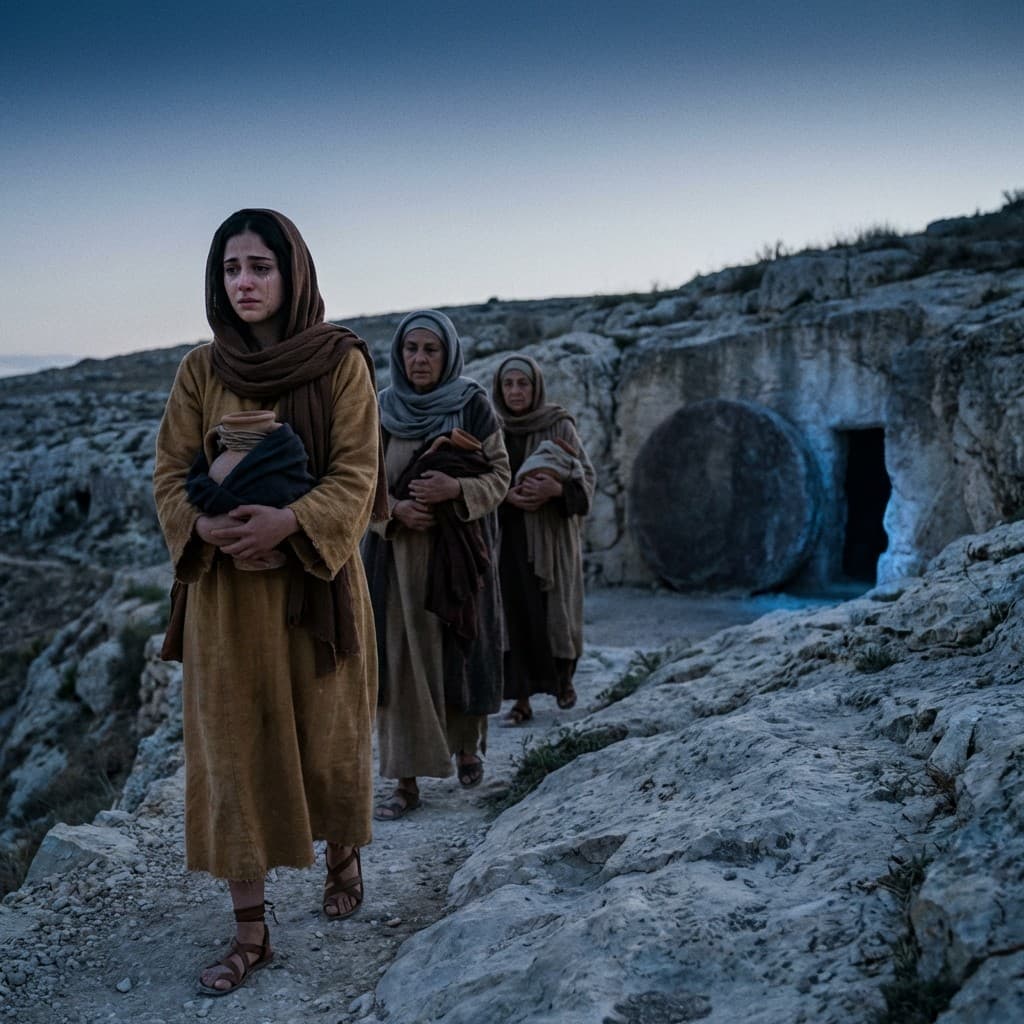
The resurrection accounts differ in surprising ways — who arrived first, what they saw, and how they reacted. The Bible's version is more complex than you think.
Posted by
 HearBibleStories Editorial Team
Related reading
The Crucifixion — What the Bible Actually Describes
The crucifixion account includes details most people have never noticed — from a solar event to a torn curtain to the identity of the man who carried the cross.
The Prodigal Son — The Older Brother Is the Real Story
Everyone remembers the son who left. Almost nobody talks about the son who stayed — and his reaction is the real point of the parable.
Crossing the Red Sea — It Took All Night, Not Minutes
The crossing took all night. A pillar of fire stood between the armies. And 'Red Sea' may be a mistranslation. The real account is more dramatic than you think.
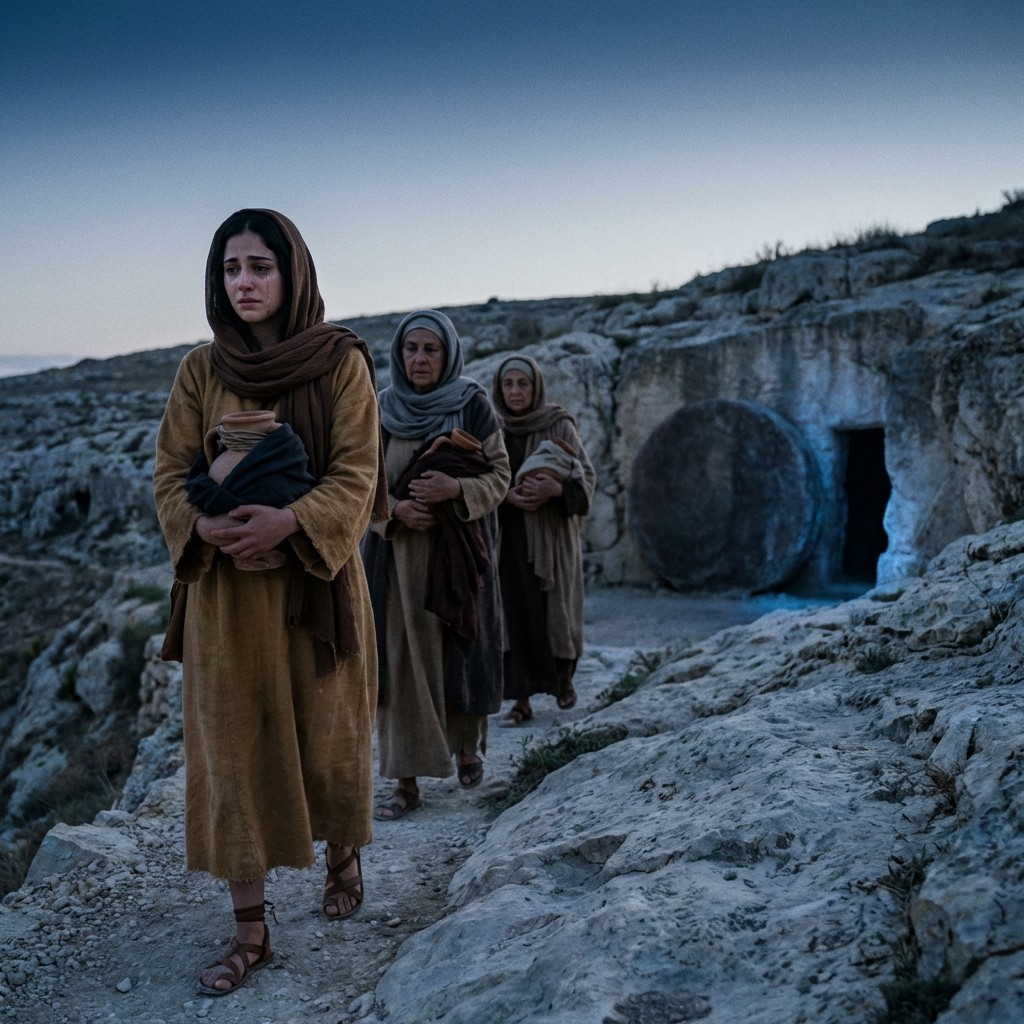
The resurrection of Jesus is the central event of the New Testament. But the four Gospel accounts describe it with different details — different witnesses, different encounters, different reactions. Reading them side by side reveals a more complex picture than any single retelling captures.
Who arrived at the tomb first?
All four Gospels agree that Mary Magdalene went to the tomb early on Sunday morning. But the details differ. Mark says she came with two other women. Matthew says one other woman. Luke lists three women and mentions others. John focuses on Mary Magdalene alone. These differences have been studied and debated for centuries.
The stone was already moved
In every account, the stone had already been rolled away before anyone arrived. No one in the Bible witnesses the actual moment of resurrection. The women arrive to find an empty tomb — the event itself is described through its aftermath, not as it happened.
The first reaction wasn't joy — it was fear
Mark's Gospel says the women fled the tomb, trembling and bewildered, and said nothing to anyone because they were afraid. Matthew says they were both afraid and filled with joy. The first response to the empty tomb wasn't celebration. It was confusion and terror.
The burial cloths were left behind
John's Gospel describes Peter entering the tomb and seeing the linen strips lying there, with the cloth that had covered Jesus' head folded separately. The text draws attention to this detail — the wrappings were left behind in an orderly way, not torn off or scattered.
Jesus wasn't immediately recognized
In several post-resurrection appearances, people didn't recognize Jesus at first. Mary Magdalene thought he was the gardener. The two disciples on the road to Emmaus walked and talked with him for hours without knowing who he was. The text presents this as significant, not accidental.
The resurrection account is more layered and more detailed than most people realize. Hear every Gospel's version — nothing harmonized, nothing assumed.
Frequently Asked Questions
Who was the first person to see the empty tomb?
All four Gospels agree Mary Magdalene was among the first to arrive, but they differ on who accompanied her — ranging from one to several other women.
Did anyone witness the actual resurrection?
No. In all four Gospels, the stone had already been rolled away and the tomb was empty when the first visitors arrived. The resurrection itself is not directly described.
Why didn't people recognize Jesus after the resurrection?
In several accounts, people didn't initially recognize the risen Jesus — Mary Magdalene mistook him for a gardener, and two disciples walked with him for hours without knowing who he was.
Hear the Bible come to life
Listen to hundreds of Bible stories with HD narration on the HearBibleStories app.


Or browse the full story catalogue on the web.
Related reading
The Crucifixion — What the Bible Actually Describes
The crucifixion account includes details most people have never noticed — from a solar event to a torn curtain to the identity of the man who carried the cross.
The Prodigal Son — The Older Brother Is the Real Story
Everyone remembers the son who left. Almost nobody talks about the son who stayed — and his reaction is the real point of the parable.
Crossing the Red Sea — It Took All Night, Not Minutes
The crossing took all night. A pillar of fire stood between the armies. And 'Red Sea' may be a mistranslation. The real account is more dramatic than you think.
Jonah — Most People Only Know Half the Story
Jonah wasn't swallowed by a whale. And getting spit out wasn't the end — the real story gets stranger from there. Most people have only heard half of it.