The Crucifixion — What the Bible Actually Describes
The crucifixion account includes details most people have never noticed — from a solar event to a torn curtain to the identity of the man who carried the cross.
Posted by
 HearBibleStories Editorial Team
Related reading
The Resurrection — The Details That Differ Between the Gospels
The resurrection accounts differ in surprising ways — who arrived first, what they saw, and how they reacted. The Bible's version is more complex than you think.
The Prodigal Son — The Older Brother Is the Real Story
Everyone remembers the son who left. Almost nobody talks about the son who stayed — and his reaction is the real point of the parable.
Crossing the Red Sea — It Took All Night, Not Minutes
The crossing took all night. A pillar of fire stood between the armies. And 'Red Sea' may be a mistranslation. The real account is more dramatic than you think.
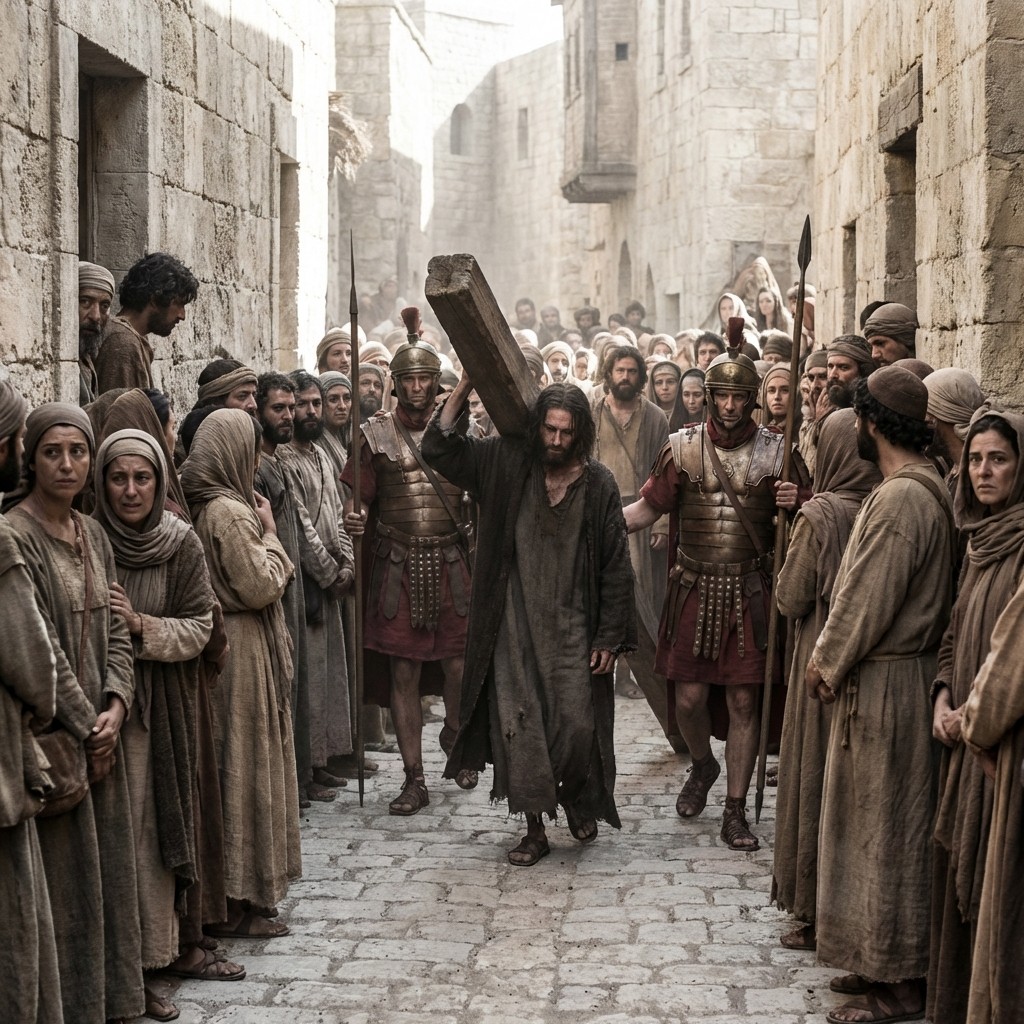
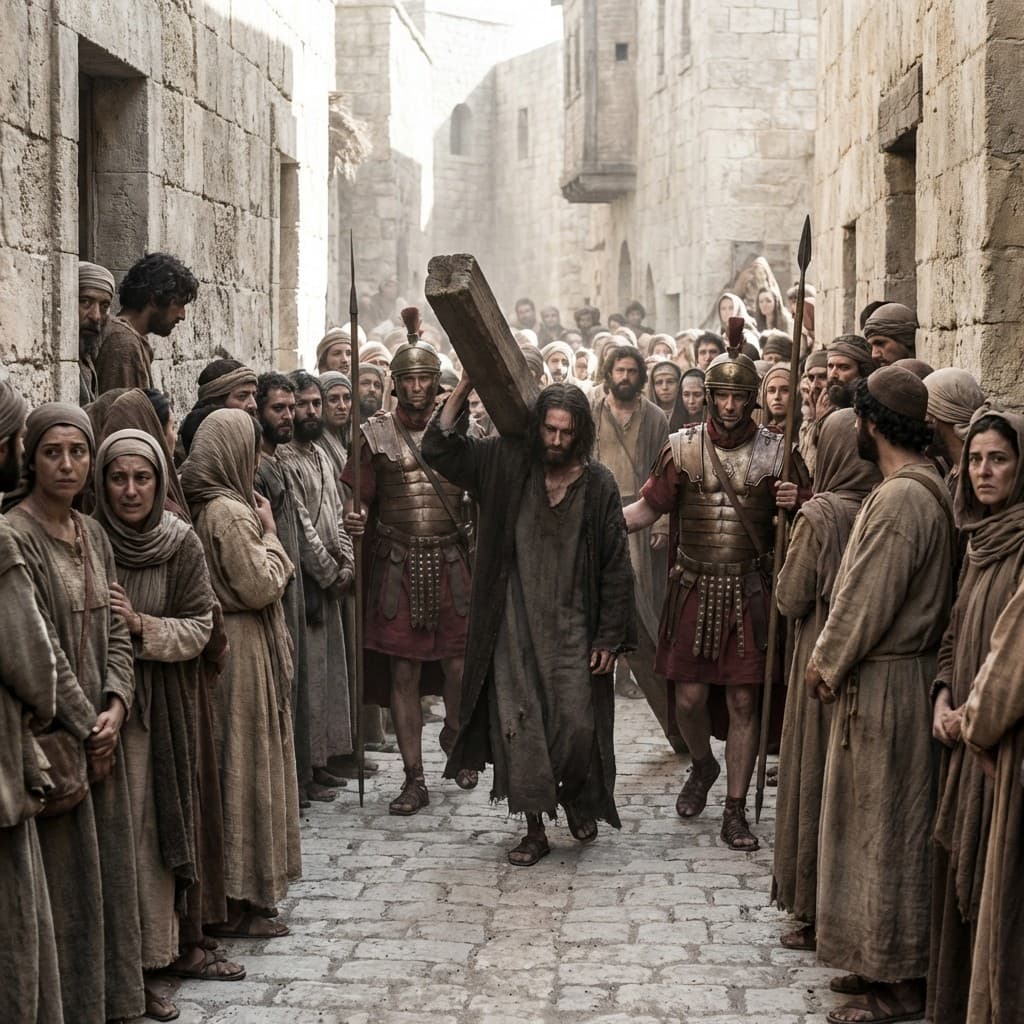
The crucifixion is the most depicted event in all of Christianity. But the biblical account — spread across all four Gospels — contains specific details that most visual depictions leave out and most retellings skip. What the text actually describes is more layered than the version most people carry.
Someone else carried the cross
Jesus did not carry the cross the entire way. The Gospels of Matthew, Mark, and Luke all state that the Roman soldiers forced a man named Simon of Cyrene — a bystander from North Africa — to carry it. John's Gospel says Jesus carried it himself. This is one of the most discussed differences between the accounts.
Darkness covered the land for three hours
All three Synoptic Gospels record that from noon until 3 PM, darkness fell over the whole land. The text doesn't call it a normal weather event. It presents it as something extraordinary — a midday darkness that lasted three hours during the execution.
The temple curtain tore in two
At the moment of Jesus' death, the massive curtain in the Jerusalem Temple — the one separating the Holy Place from the Most Holy Place — tore from top to bottom. The Gospels state the direction specifically: top to bottom, not bottom to top. The theological implications have been debated for centuries.
The soldiers cast lots for his clothing
Roman soldiers divided Jesus' garments among themselves by casting lots — essentially gambling for his clothes while he hung above them. John's Gospel adds that the tunic was seamless, woven in one piece, so they decided not to tear it.
A Roman centurion made an unexpected declaration
After watching Jesus die, the Roman centurion overseeing the execution said something no one expected. Mark records his words as a declaration about who he believed Jesus was. A Roman officer, not a disciple, made this statement — and the Gospels record it as significant.
The crucifixion account is more detailed and more surprising than most people realize. Hear the full story, told directly from what the Bible describes.
Frequently Asked Questions
Did Jesus carry his own cross?
Three of the four Gospels say a man named Simon of Cyrene was forced by Roman soldiers to carry the cross. John's Gospel says Jesus carried it himself.
What happened to the sky during the crucifixion?
The Synoptic Gospels report that darkness covered the land from noon until 3 PM — a three-hour period of unexplained midday darkness.
What happened to the temple curtain when Jesus died?
The curtain separating the Holy Place from the Most Holy Place in the Jerusalem Temple tore in two from top to bottom at the moment of Jesus' death.
Hear the Bible come to life
Listen to hundreds of Bible stories with HD narration on the HearBibleStories app.


Or browse the full story catalogue on the web.
Related reading
The Resurrection — The Details That Differ Between the Gospels
The resurrection accounts differ in surprising ways — who arrived first, what they saw, and how they reacted. The Bible's version is more complex than you think.
The Prodigal Son — The Older Brother Is the Real Story
Everyone remembers the son who left. Almost nobody talks about the son who stayed — and his reaction is the real point of the parable.
Crossing the Red Sea — It Took All Night, Not Minutes
The crossing took all night. A pillar of fire stood between the armies. And 'Red Sea' may be a mistranslation. The real account is more dramatic than you think.
Jonah — Most People Only Know Half the Story
Jonah wasn't swallowed by a whale. And getting spit out wasn't the end — the real story gets stranger from there. Most people have only heard half of it.